
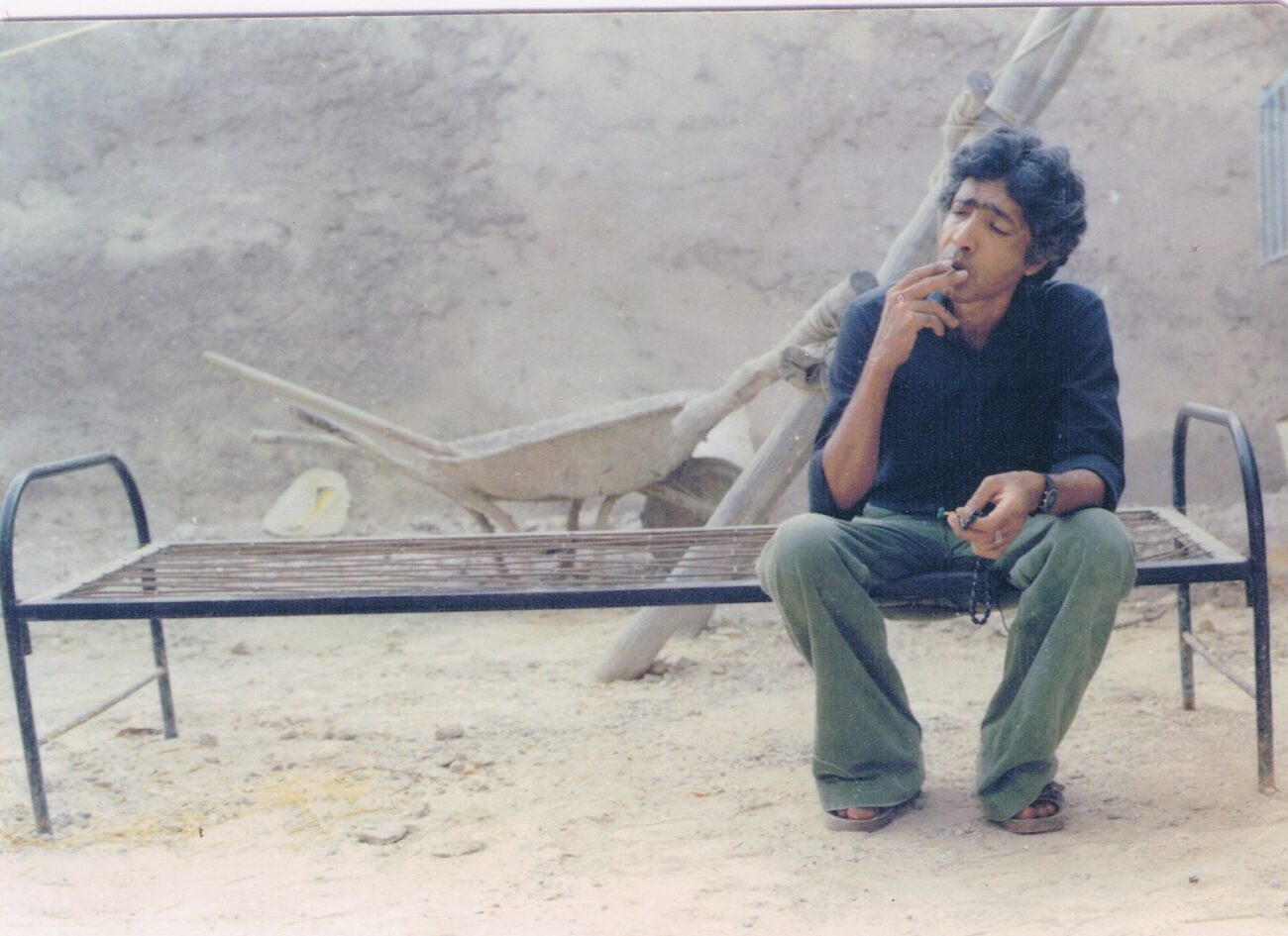
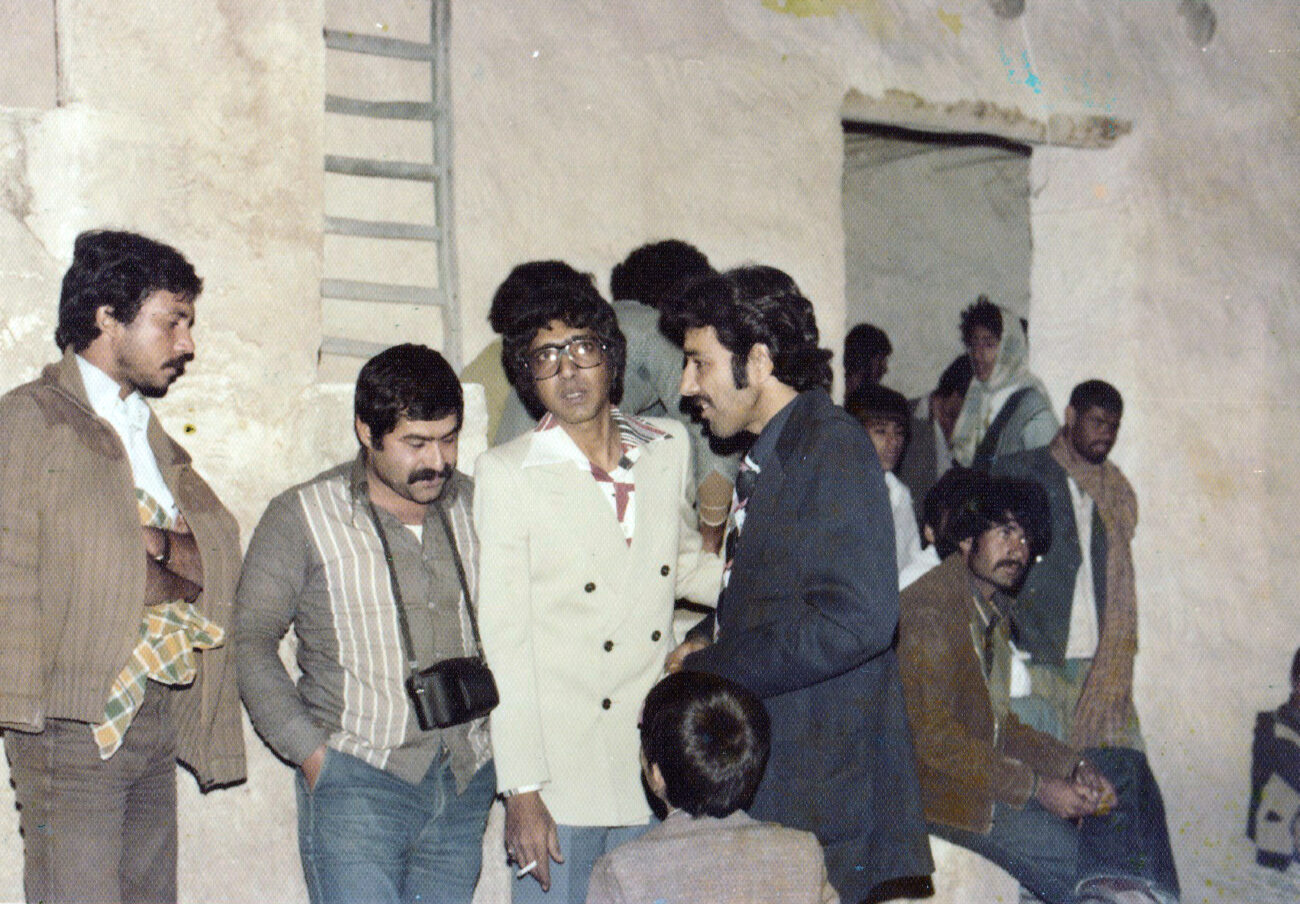
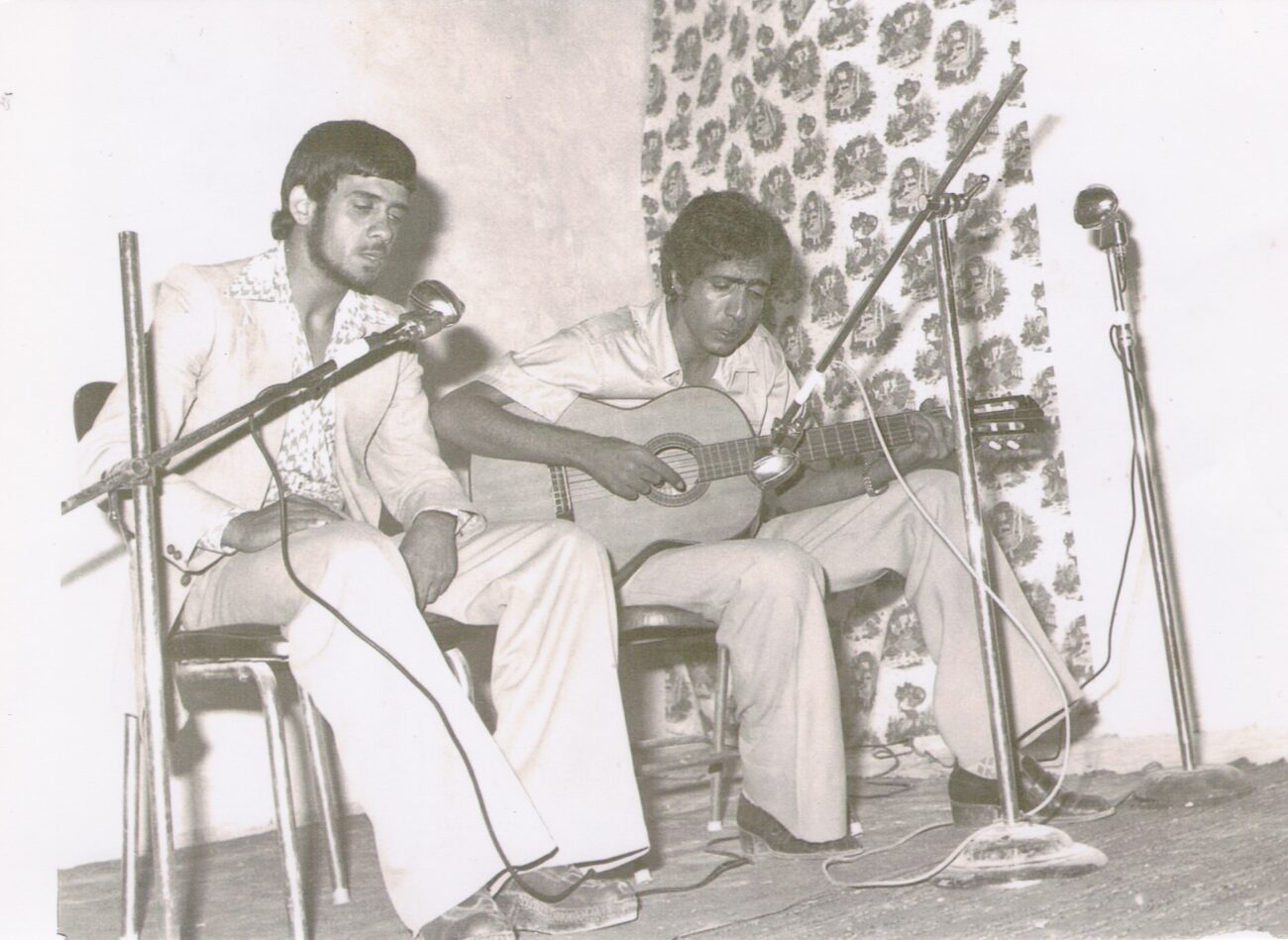
Anyone who has read about Bandar Abbas in the news this year knows the city as a port on the Strait of Hormuz, as a military target, as a point on a map with arrows. More than half a million people live there, and they do not appear on that map. These images are not wrong, but they show only a section. Every image has an edge, and most of the time we no longer see who chose it. I wish this city were known for Ebrahim Monsefi, not for the Strait of Hormuz.
Monsefi, known as Ebram, was a singer, guitarist and poet, not an official figure. He sang with a few chords, mostly alone, and never recorded his songs in a studio. He brought flamenco and Indian music together with the dialects of the south. He died in 1997 at the age of fifty two. Only afterwards were his recordings discovered, little by little. Today young guitarists in the south sing his songs, and in Hormozgan he is called the Nima of the South, after the father of modern Persian poetry. No archive preserved these songs. People did. What touches me is how something remains that never had a secure place.
Kamran Heidari does not tell this like a biography. He gathers traces, faces, old recordings and voices that sometimes contradict each other. We come to know Monsefi through others, and he remains strangely close and out of reach at the same time. Many of the images are shot from the air, and with Monsefi’s voice it feels as if the dead man himself were looking down at his city. The view from above, usually the view of maps and target coordinates, here becomes the view of someone in love. The film shows no monument and no important building, and still it tells a place. For me, that is an architectural question. Memory is not only kept in monuments, but also in paths, in shadows, in the wind from the sea and in the way people sit together.
My first question was not which film I wanted to show, but which images are missing. Because when it comes to flight and asylum, there are likewise only two images, pain on one side, the success story on the other. Both are true, and both remain too small. A person brings more with them than their wounds, and that is exactly what the music in this film carries. You do not have to understand every word to hear a longing or a tiredness.
The title sounds like a rejection. What business is it of yours? The film does the opposite. It approaches a person who is no longer here through the memories of others, without claiming to own him. I am not showing it in order to say, this is Iran. No film can do that, and neither can I. Nor do I want to create pity, because pity keeps its distance. I want a person to become larger than the image that was made of them.
Curator
I was born in Tehran and have lived in Munich since 2012. My way here was not one I chose. I had just finished my training as an architectural drafter when I had to leave Iran. In Munich I started again from the beginning, all the way to two master's degrees in art, architecture and urban design. Today I work between city, space, art and film. I think about films spatially and about spaces like films. A building does not reveal itself all at once. You arrive, you enter, you wait, you look back. In film too, someone decides where we look and what stays outside the frame. A space is never neutral, and neither is an image. Since 2025 I have been teaching, among other places at the University of Siegen and at the Academy of Fine Arts Munich. For me, film is a method for seeing and making architecture, from urban design down to the detail. With Ciné Vélo Cité, the bicycle cinema I co founded and whose board I sit on, we put up screens in places where otherwise nobody looks. Whoever builds such places also has a say in who belongs. Asylum is not something I talk about from the outside. That is exactly why I know how quickly a person is reduced to a single story. They lived before it and go on living after it, with music, memories and a childhood that does not have to have anything to do with flight. At Kino Asyl I look for films that do not want to speak for a country. Films that open something up instead of explaining it.